Inspiration My Philosophy In Practice One Lesson, Four Strategies
Inspiration — Where My Teaching Philosophy Begins
不闻不若闻之,闻之不若见之,见之不若知之,知之不若行之。学至于行之而止矣。
《荀子·儒效》
Tell me , and I will forget.
Show me , and I will remember.
Involve me, and I will understand.
Step back, and I will act.
A modern teaching adaptation
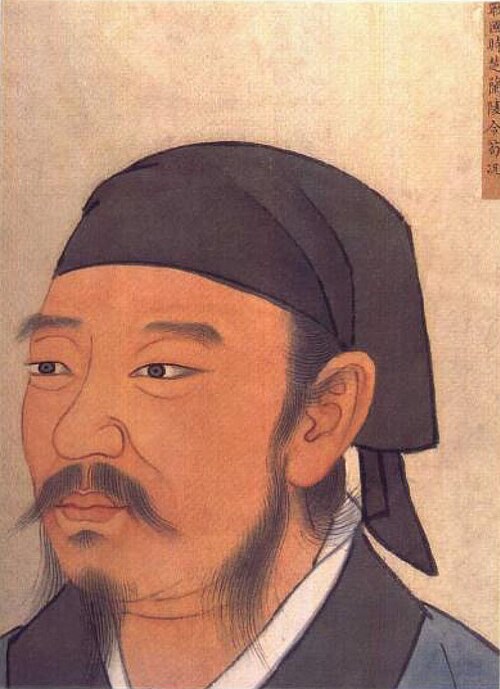
I came to this passage through a familiar teaching saying. Reading Xunzi in Chinese, I was struck by the movement in his words. Hearing opens a possibility. Seeing gives it shape. Knowing matters because it enables a learner to act. In my own classroom, each of those moments asks something different of me.
I added “Step back” because the last move belongs to the learner. I can explain a method clearly and work through a convincing example, yet still leave a student wondering what to do without me. How do I tell when to offer another example and when to give the next decision back?
My Teaching Philosophy
Engagement begins when students have a reason to look closer. I might ask for a prediction before I teach the mathematics. Committing to an answer gives students something of their own to revisit.
Understanding becomes visible when students can explain why a step works. I listen to the reasons behind a poll response or a group’s choice of method. A correct answer can conceal a guess, while an unexpected answer can tell me exactly which idea needs attention.
Independence means taking responsibility for a decision in a new problem. I want students to be able to choose a method, question their result and explain what they would try next.
I use Tell me to give a problem structure and make the goal clear. With Show me, I make a process visible through a worked example, a game or an animation. With Involve me, I ask students to predict, calculate or discuss so that I can hear their reasoning. With Step back, I leave a meaningful choice in their hands and stay available for feedback.
These are decisions I revisit during a lesson. If a group can reproduce my calculation but cannot explain its choice, I may ask them to compare two possible approaches with me. Once they can account for the difference, I give them a fresh problem and time to decide where to begin.
Philosophy in Practice
How I engage students and respond to feedback
I use BOPPPS to plan what students will do across a class. A bridge-in gives them a problem worth considering. I name the objective and check prior knowledge before we begin. During participatory learning, students discuss or solve part of the problem. A short post-assessment shows me which ideas need another look, and a closing summary connects the pieces. The early and late checks help me decide what to change while we are still together.
In Probability and Statistics, I ask students to predict how many people it takes for the chance of a shared birthday to exceed 80%. I collect guesses before showing a short talk-show clip. Groups discuss why the guesses differ. We then work through the probability that all birthdays differ, take its complement and check the result in code. With 365 equally likely, independent birthdays, 35 people suffice. What interests me most is hearing who first compared everyone only with themselves, and when they began considering every possible pair.
When a poll reveals a common difficulty, I try another example with the whole class. When I see the difficulty in one group’s shared notes, I can work with that group while others continue. I also collect midterm feedback so that the students who offer it can experience the changes.
How I make abstract ideas visible
In Data Analysis, Mathematics, Algorithms and Modeling, I give each method a place in a complete investigation. Students define a problem, prepare their data, extract or select features, fit a model and evaluate it. As we introduce a technique, they return to their project and ask what it would contribute to their own question. A model is much easier to evaluate when students remember what they wanted it to tell them.
In FrozenLake, students can see an agent make a move, arrive at a new square and encounter a consequence. I use that experience to name states, actions, rewards and policies. We then reason about future value, connect it to the Bellman equation and carry the idea into a Q-learning implementation. When a formula feels unfamiliar, I can ask students which move on the lake it describes.
For the Transformer, I use a translation example and reveal the architecture a part at a time. We follow what happens to the example as the pieces appear, then return to the full diagram and the technical details. I want students to be able to locate a component in the larger computation and explain what work it does. Explore these activities in PROG74040.
How I support independent work
In linear algebra and probability, I use I Do / We Do / You Do. I work an example aloud so students can hear why I choose a step. They tackle a related problem with peers and compare their reasoning. Then each student starts a new problem independently. That last attempt helps me see whether my example gave them a method they can use. Read about MATH71010.
In my staged data and statistics projects, students submit a proposal with a question, a dataset and an initial plan. I can ask whether the data will actually answer the question while there is still time to revise. Later, students choose methods, interpret the results and present their conclusions. Returning to the same investigation gives feedback a practical purpose and leaves students responsible for the revisions.
I take a similar approach in capstone and research mentoring. In collaborative projects involving biological sequences and clinical text, I helped students frame a manageable question and understand the technical approach. As the work progressed, I gave them more responsibility for implementation, testing and explaining their contribution. I stay involved by asking about the choices they have made and what evidence would help them choose their next step.
One Lesson, Four Strategies
In my decision-tree teaching demonstration, I begin with a guessing game and end with a classification problem that students take on themselves.
Tell me. I introduce the classification problem and the learning objectives. Students know what to look for as the lesson unfolds: how a sequence of questions can separate examples into groups and why one question might make a better split than another.
Show me. I demonstrate the idea with Guess Who? As a question rules out some faces and leaves others in play, students can see a branch take shape. We have a shared example to return to when the mathematics arrives.
Involve me. Students participate in the game, respond to questions and discuss the splits in groups. We calculate entropy and information gain so they can compare what two candidate questions do to uncertainty. I can now ask them to explain why they favour one split and listen to the reasoning behind their choice.
Step back. For the follow-up assignment, I give students a breast cancer classification problem. They apply a decision tree in a new context. This is the point where I leave the game behind and ask them to take responsibility for using the method. The question I carry forward is whether they can explain a splitting decision when the examples and features are their own to examine.